


More wins, more moving parts, more people depending on you, and yet you’re less patient, less playful, less you than ever before.
It’s not that you’re “burnt out” in a dramatic way. It’s more like you’re slowly getting squeezed into a version of yourself that only exists to hold the business together.
Today, I’ll show you the pattern behind that, and a simple reset you can run this week, so growth stops taking bits of you with it.
Here’s the loop I see all the time, and I’ve done it myself many times!
The Busy Loop:
The business grows, leading to more clients, greater complexity, and more decisions with consequences.
Unintentionally, you become the default for anything that feels risky, urgent, messy, or awkward. Not because you’re controlling, but because you’re competent and everyone knows it.
You start confusing “being valuable” with “being needed.” You keep catching things, fixing things, smoothing things, approving things. And the things that make you you (training, friends, reading, thinking) get pushed to “later”.
You’re still producing. But it feels brittle.
You’re quicker to snap, and your creativity goes a bit dull. Decisions feel heavier than they should. And you can’t quite explain why you’re not enjoying the thing you wanted to build.
The aim isn’t to slow down growth.
It’s to stop growth happening through you.
There are a few useful points here:
So if you’ve been thinking, “Why am I like this lately?”, it’s not a character flaw. It’s usually the way the work is set up.
A founder I know scaled quickly and did what most good founders do at first: they carried the quality bar on their back.
Every client escalation, every awkward conversation, every delivery wobble… it landed with them.
The team was capable, but the habit became: “If it feels risky, put it with the founder.”
We didn’t overhaul everything. Instead, we picked two recurring problems and gave someone else the decision, not just the task, with a clear definition of “good” and a clear rule for when it comes back.
Within a few weeks, the biggest difference wasn’t operational; it was personal. They stopped bracing all day; their humour returned, and their thinking sped up.
The business didn’t get smaller.
It just stopped leaning on them for stability.
Here’s the reset. If you do one thing from this issue, do this.
Role Audit (10 minutes) Make two lists:
Only I Can (max 5) The founder-only stuff. The few things that are genuinely yours to carry.
I’m Still Doing Out of Habit Approvals, rescues, “I’ll just do it quicker”, being copied into everything, jumping in because it’s easier than explaining.
Circle the top 2 that drain you the most.
2. Assign Decision Rights (10 minutes)
For each of the two circled items, write this down:
This is the part most people miss.
Handing off tasks helps, but handing off decisions is where you actually feel the difference.
3. Protect one “Self Input” for 7 days (10 minutes)
Pick one thing that makes you feel like you again:
Put it in the calendar like it matters. Because it :does.
Rule for the week:
If growth only works when you’re running on empty, the setup needs changing.
You don’t “find yourself again” when things calm down.
Things calm down when you stop being the thing that’s holding everything together.
One of the most consistent findings in burnout research is that low control, unclear roles, and constant switching are a nasty combination. It’s why “just take a break” rarely fixes it. The same pressures are waiting for you when you get back.
And the nuance: some seasons are intense, that’s totally normal. The red flag appears when intensity becomes the business model.
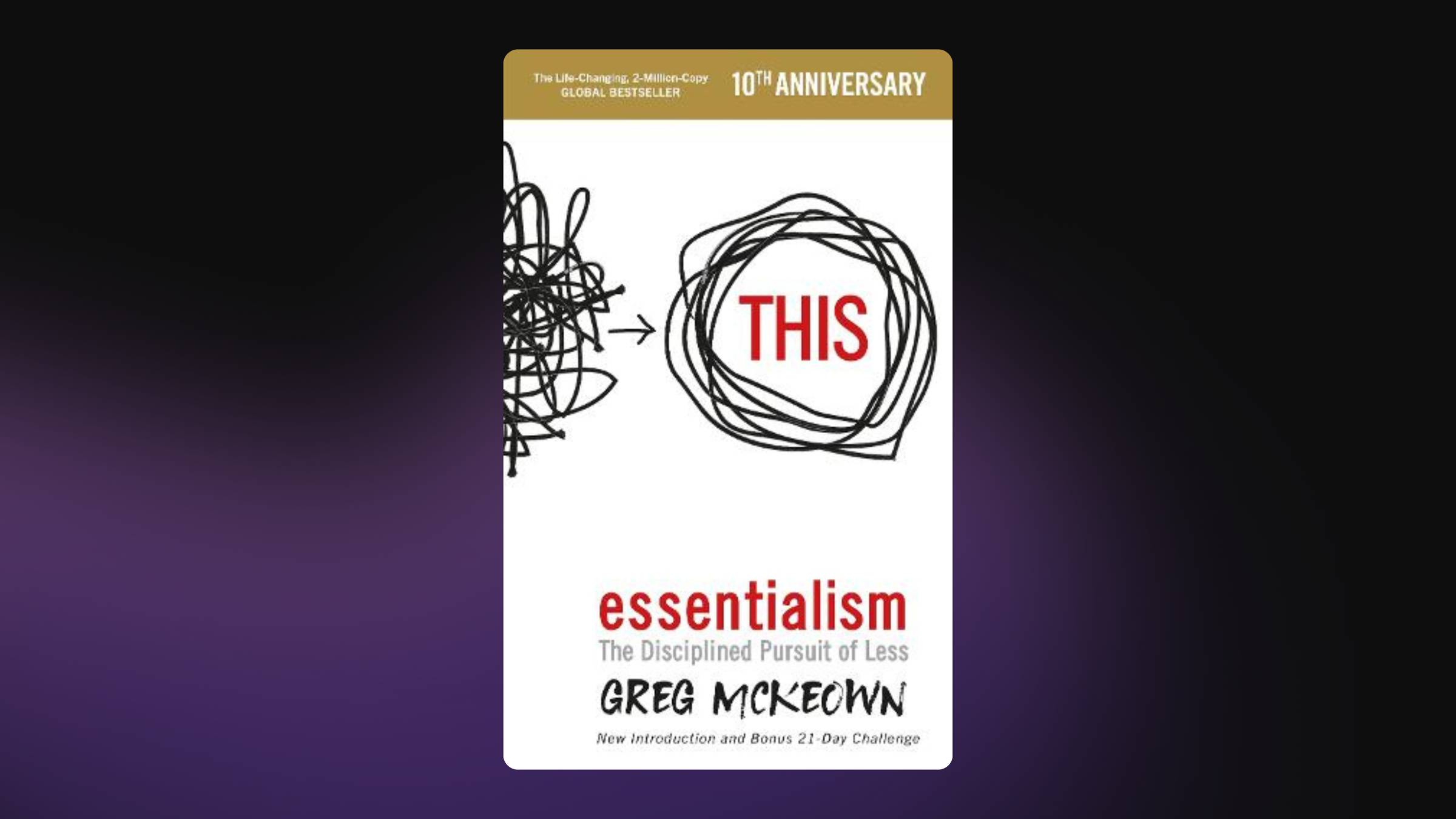
This isn’t a “do more” book. It’s a “stop automatically saying yes” book.
If scaling has pulled you into being available for everything, it gives you language (and permission) to protect what actually moves the needle.
How to use it this week: pick one chapter, then remove one commitment that your future self will thank you for.

If you’re feeling a bit scattered right now, you don’t need a new strategy; you need a cleaner week. The Focus Toolkit helps you choose the few things that matter, block time for them, and stop letting everything else chew up your attention.
If you run an agency and have ever thought, “This business works… but only because I’m in the middle of everything,” Unusual Group is built for that.
We work with founders to make the agency easier to run, easier to grow, and easier to sell one day if that’s the plan. Not with big promises. With the practical stuff buyers actually look for: healthier margins, less client risk, delivery that doesn’t fall over when you step back, and a clear story the numbers can back up.
If you want a quick, honest view of where your business is strong and where it’s leaking value, start with the free Exit Assessment. It’ll show you what to fix first.
Scaling should expand your options.
If it’s shrinking your personality, that’s not “the cost of growth”, it’s a signal you need to pay attention to.
You don’t need to become less human to build something big.
You just need a business that doesn’t rely on you to feel safe.
To your unstoppable success,
Writer, The Success Method

%20(1).webp)

.jpg)


