


Hello,
Big decisions don’t just test what you know. They test how fast you can act on it.
Most founders stumble in one of two ways. They either pull the trigger too early and regret it, or they wait for total certainty and miss the window.
The truth?
100% certainty is an illusion. By the time you reach it, the opportunity has already passed.
The smartest founders operate differently. They aim for 70%, enough information to act with confidence, not so much that they lose speed.
This week, I revisited the OODA Loop, a decision-making model from military strategist John Boyd: Observe, Orient, Decide, Act. Its genius isn’t complexity, it’s speed. You don’t wait until you know everything. You gather enough to act, then adapt in motion.
The mistake most founders make is looping endlessly in the first two stages, observing and orienting, chasing perfect information, but never deciding or acting. That’s how opportunities die.
Not through bad calls, but through calls never made.
Jeff Bezos built Amazon on this principle. He made most decisions with about 70% of the information.
Move at 50% and you’re reckless.
Wait for 90% and you’re too slow.
70% is the balance point where risk is managed and momentum compounds.
While competitors were still modelling and debating,
Amazon was shipping, testing, and learning.
A founder I worked with delayed a product launch for six months, chasing flawless forecasts. By the time they were ready, competitors had already captured the market.
When we reframed their approach around the 70% rule, everything shifted. The next launch went live with enough information to feel confident but not enough to stall.
The result? The market response provided them with more actionable data in two weeks than six months of analysis ever could. And because they moved faster, they adjusted faster, and pulled ahead.
Momentum created clarity faster than analysis ever will.
Audit your last three big decisions:
Bain & Company found that companies that make faster decisions achieve results up to 12x more effectively than their slower peers.
The edge isn’t certainty. The edge is speed.
Certainty is overrated. Speed is underestimated.
This week, pick one decision you’ve been overthinking. Gather enough information to hit 70%, then make the call.
Remember: clarity follows momentum, not the other way around.
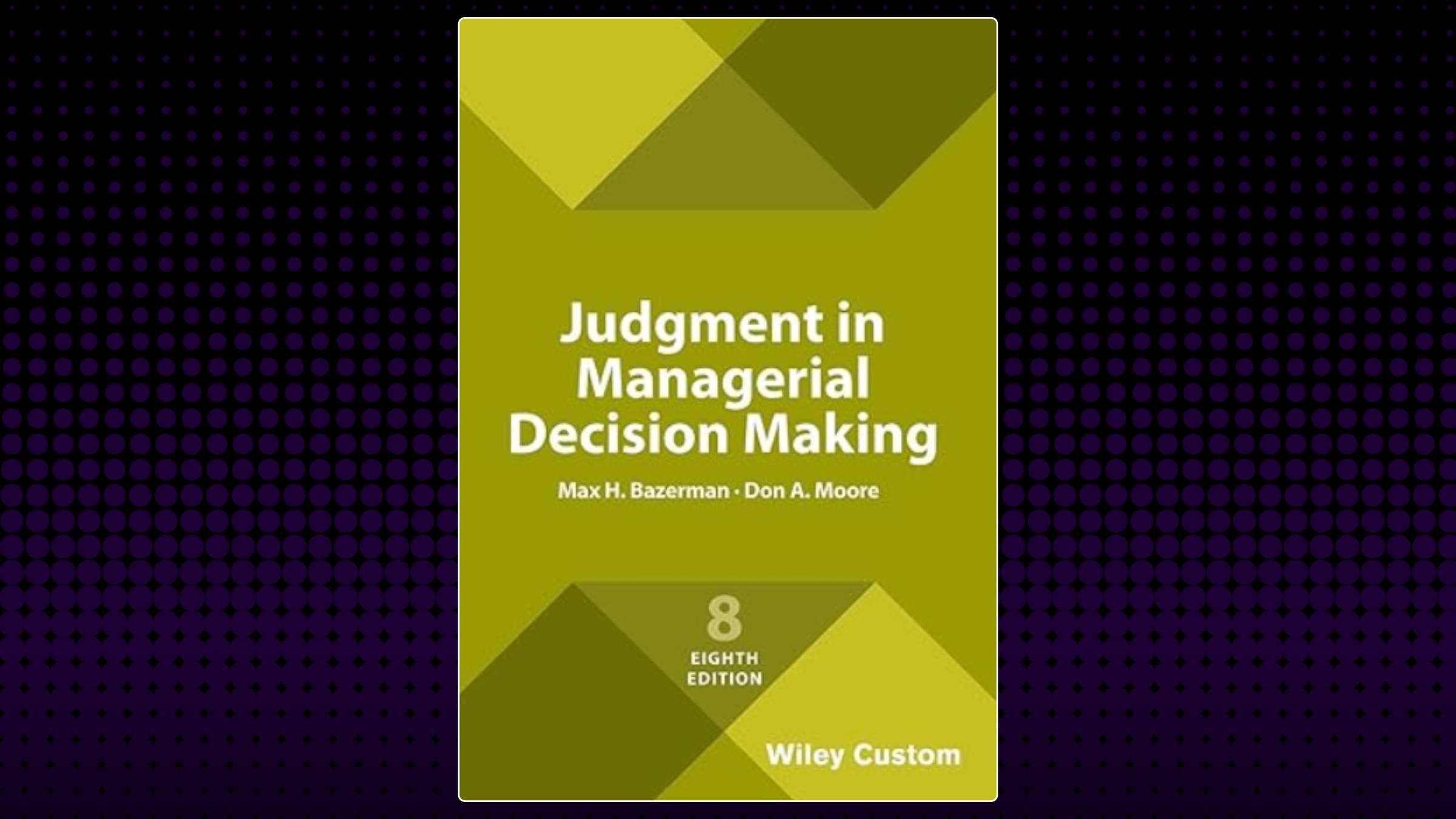
If you’ve ever found yourself stuck in endless analysis, this book feels like a mirror. Bazerman doesn’t just explain the biases that slow leaders down; he shows you how to build decision frameworks that cut through the noise.
I’ve recommended it to founders prone to overthinking, and the shift is real: fewer second-guesses, faster calls, better outcomes. If speed is the lever you need to pull, start here.
Better decisions don’t come from over-analysing. They come from acting with clarity. That’s why this week’s resource is The Focus Toolkit, a practical guide to filtering distractions, prioritising what matters, and moving faster on the calls that count.
If the OODA Loop is about observing, orienting, deciding, and acting, this toolkit helps you avoid getting stuck in the first two stages and move decisively into action. Pair it with the 70% rule, and you’ll make faster calls without stalling momentum.
Next week, we’ll tackle one of the trickiest founder dilemmas: when to trust your gut and when to ignore it. You’ll see what neuroscience reveals about intuition, why it’s a superpower in some decisions and a liability in others, and how to tell the difference in high-stakes calls.
Because speed matters, but only if you’re steering in the right direction.
What’s the decision you’re currently stuck on? Hit reply and tell me. I’ll share real examples in the next issue.
To your unstoppable success,

Writer, The Success Method

%20(1).webp)
.jpg)


