


There's a certain type of paralysis that hits when you sit down to write something and open LinkedIn first.
You tell yourself you're looking for inspiration. But what really happens is you spend twenty minutes reading what everyone else has posted, and by the time you close the tab, whatever you were going to say feels smaller and less important. It’s less interesting and has already been said.
You’re not alone. I've done this more times than I'd like to admit.
The comparison loop is subtle because it doesn't feel like a comparison. It feels like research, you’re just staying informed. But underneath it, something is shifting. You're starting to measure your ideas against someone else's best moments before you've even started to write.
And you're only seeing what landed. You're not seeing the 10 posts that got 12 likes, the ideas they second-guessed, or the drafts they deleted. Comparing your unfiltered thinking to the very best moments of someone else's output isn't useful. It just makes your own ideas feel smaller than they are. The only way out of that loop is to catch it early, before it's had time to do its damage.
The loop isn't random. It usually starts because posting feels risky, and looking at what other people are doing feels safer. It gives you something to react to, rather than having to start from nothing.
But the more you do it, the more your own ideas get filtered through someone else's frame. You start writing for the feed rather than from your own experience, and it starts to sound like everyone else's, and readers notice.
Most people who struggle with personal branding have more to say than they realise. The problem isn't a shortage of ideas. Usually, it’s that they've spent so long measuring their thinking against what seems to be working for other people, that they've stopped trusting what they actually know.
Your own voice is usually the thing you'd say to someone over coffee. What you said to someone last week that made them stop and think. The lesson that took you years to learn, that you now think of as obvious.
That's the stuff worth writing about.
The simplest fix I've found is to write before you look. Open a document before you open the feed. Get your ideas down in whatever rough form they come out in, and then decide whether they’re worth developing.
When you write after scrolling social media, you're already performing. You've subconsciously started thinking about how it lands rather than whether it's true or worth saying. That's when writing gets hard.
Write first. Edit later. Look at what everyone else is doing last, if at all.
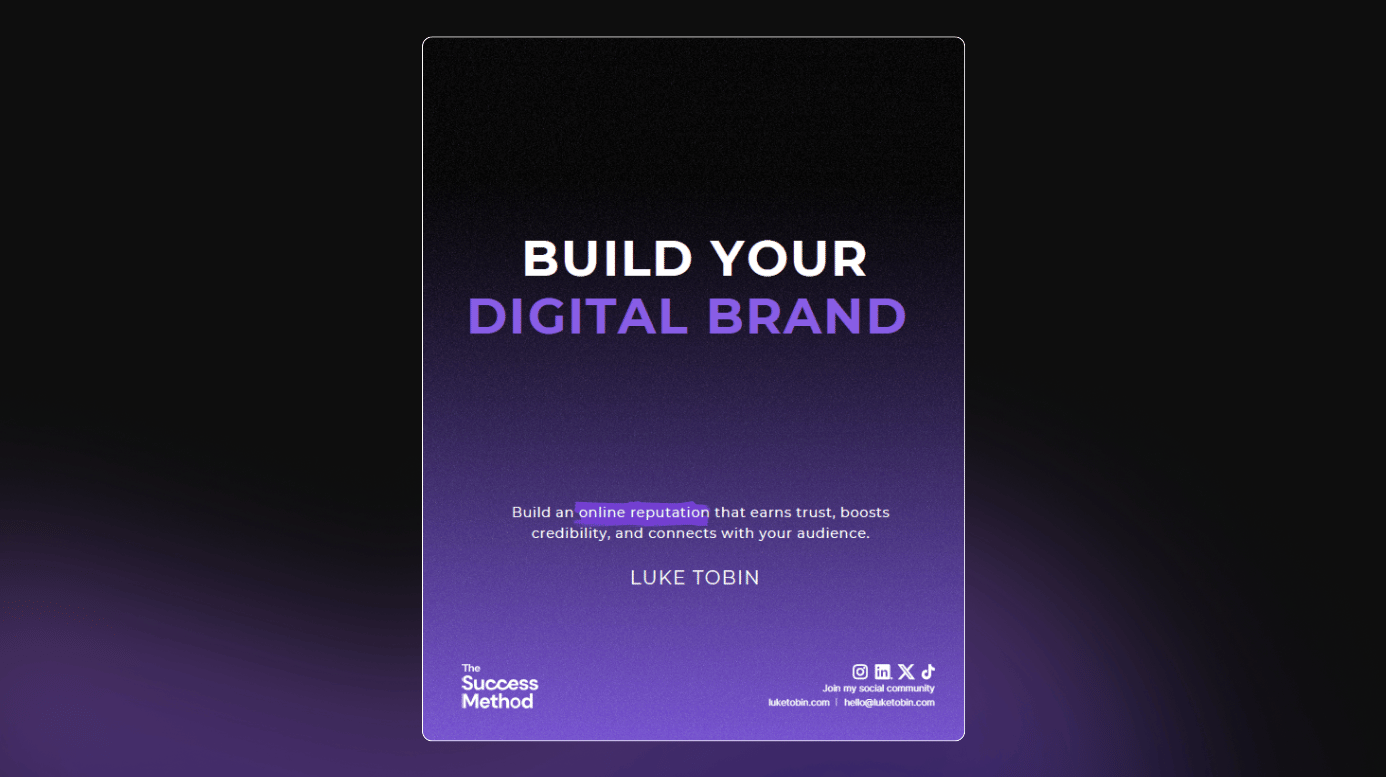
Use this to free guide build an online reputation that earns trust, boosts credibility, and connects with your audience.
Next time you sit down to write something, don't open LinkedIn first.
Write down what you actually think, the honest version. Then ask yourself: Does this sound like me, or does it sound like what I think I should be saying?
You don't have to post it. Just notice the difference.
If you want to think through what you actually want to be known for, and what that sounds like in your own voice, let's talk.
Most people aren't short of ideas.
They're short of confidence in the ones they already have, usually, because they've been measuring them against the wrong thing.
Here's to finding your own voice,
Writer, The Success Method

%20(1).webp)

.jpg)


