


The Compound Effect of Small Decisions
Small decisions compound. Most founders aren't paying attention.
Early in one of my businesses, I made a decision that seemed almost too small to think about.
A client asked for a small piece of additional work outside the scope of the retainer. An hour, maybe two. I said yes without charging for it.
The work got done, the client was happy - no harm done.
Except that decision compounded.
It became the implicit rule for how we handled scope. The team saw it happen and learned from it. Clients noticed they could ask and receive. Over the next 18 months, the business was carrying a significant volume of unpaid work that nobody had ever explicitly agreed to and nobody knew how to stop.
It started with one decision made without properly thinking.
There's a tendency in founder thinking to reserve careful deliberation for big decisions.
Strategy. Hiring. Pricing. Exit timing.
The small decisions get made on instinct, in corridors, in Slack replies, in the gaps between meetings that feel like real work.
But the small decisions are where culture actually lives.
They communicate what the business values more clearly than any document. They set the precedents that become the rules. They compound quietly in the background for months and years before surfacing as something large enough to require attention.
James Clear's research on habit formation makes this precise:
A 1% improvement compounds into something 37 times better over a year.
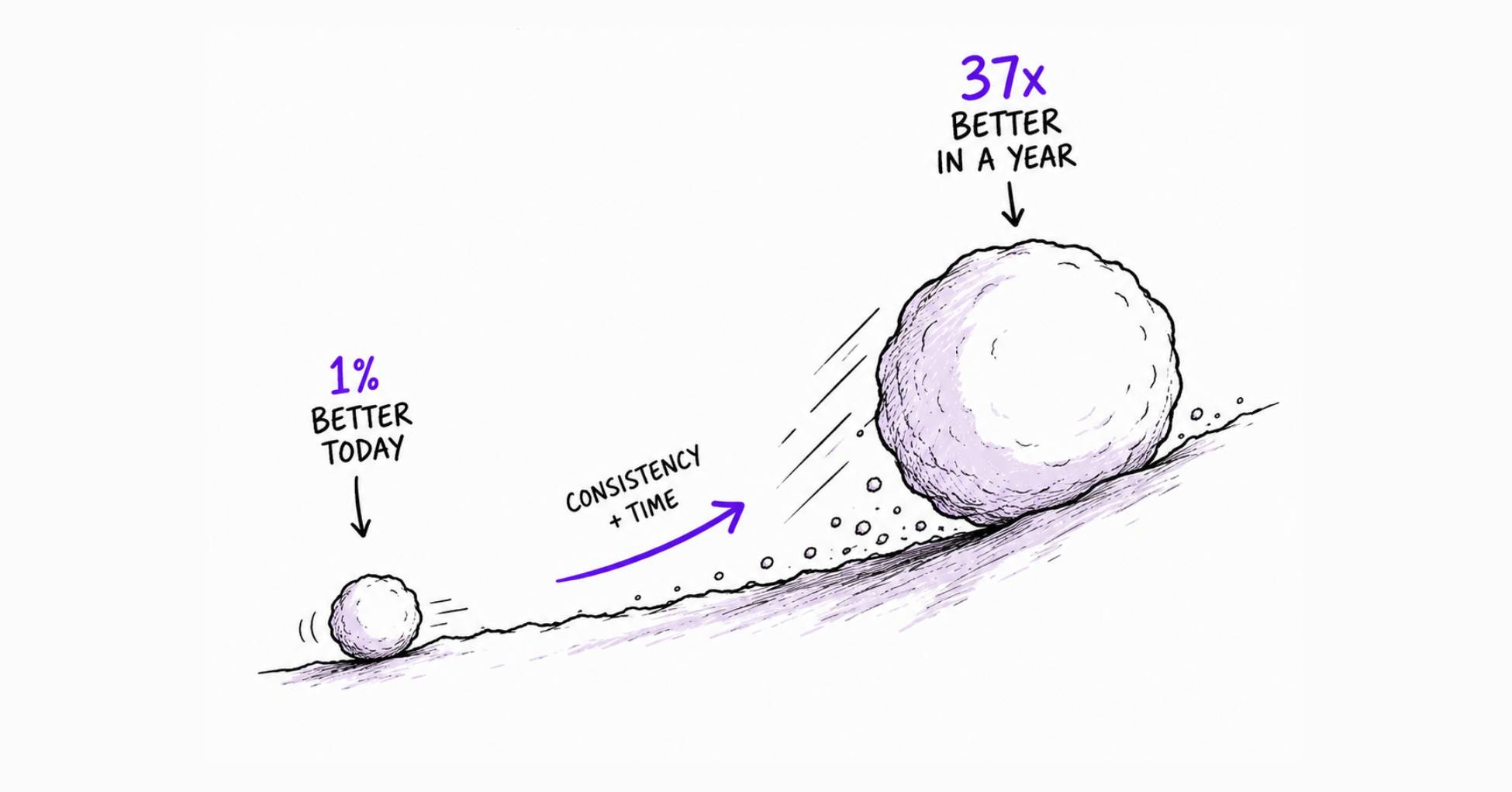
A 1% decline compounds the other way. The trajectory is set by the small, repeated decisions, not by a single large decision to change course.
The same principle applies to businesses. The culture you have in three years is being built right now in decisions you're not paying attention to.
Every time you let something slide, you're teaching the team what the real standard is. The gap between the stated standard and the lived standard is where culture deteriorates: slowly, then suddenly. The founder who avoids one difficult conversation enables ten more. The team doesn't miss it. They learn from it.
Every discount without a strategic reason teaches clients what your prices actually are and trains your team that the rate card is negotiable. This compounds into structural underpricing that takes years to unwind. The clients you win on discounted rates are also the hardest to reprice. You're not just losing margin on the deal in front of you, you're setting the floor for everything that follows.
Every decision you make that should belong to someone else is a small vote for founder dependency. Over time those votes become the architecture of a business that can't function without you: and can't be sold at the multiple it deserves. Delegation isn't about trust. It's about building a business that's bigger than one person's decision-making capacity.
Every out-of-hours response sets a new floor for client expectations. Once set, it's very difficult to raise. The availability you create in the early months of a client relationship becomes the standard they hold you to for the duration of it. You're not being helpful. You're setting a precedent you'll spend years managing.
Every undocumented process is a dependency. Every dependency is a risk. Every risk reduces valuation and increases founder reliance. Documentation is one of the highest-return investments a founder can make and one of the most consistently avoided, because it feels like admin rather than building. It isn't. It's infrastructure.
Here's the one most founders miss: the decision about what kind of founder to be.
Every time you step in when you shouldn't, you're deciding. Every time you avoid a hard conversation, you're deciding. Every time you let a standard slip because you don't have the energy to enforce it, you're deciding.
The sum of those small decisions is your leadership. And your leadership is your business' ceiling.
The gap between the founder you intend to be and the founder you are on a Tuesday afternoon in a difficult month. That gap is where most business problems actually live.
"If I made this same decision every day for the next year, what would compound from it?"
Not every decision warrants that level of scrutiny. But the ones that touch culture, pricing, delegation, and client management almost always do.
The compounding is invisible at the moment. It's very visible 12 months later.
What small decision are you making repeatedly right now that you've never stopped to examine?
The answer is probably somewhere in how you handle scope, pricing, or delegation. It's probably costing you more than you think.
Reply and tell me what you find.
Until Next Time,

Writer, The Success Method

%20(1).webp)

.jpg)


