


Hello,
Most people think burnout comes from doing too much.
In reality, it often comes from doing too little of what matters.
You can clear your diary, delegate tasks, even take time off, and still feel empty when you come back. Because burnout isn’t just exhaustion of energy; it’s erosion of meaning.
This week, we’re looking beneath the surface, at the psychology of why we burn out, what misalignment really looks like, and how to rebuild energy by reconnecting with what actually drives you.
I’ve seen high performers hit burnout at every level: founders, team leads, creatives, parents. On paper, they’re productive. But something inside quietly disengages.
That’s the point where your values and your actions stop matching. You’re still performing, but the work no longer feels like it belongs to you.
When that happens, more rest won’t fix it. Real recovery starts with alignment, bringing what you do back in line with what you believe.

Burnout isn’t simply overwork; it’s chronic internal conflict.
When your actions and values pull in opposite directions, the brain interprets that tension as a constant threat. Cortisol rises, focus drops, and motivation slowly turns into resentment.
You might tell yourself you’re tired, but what you really are is disconnected from purpose, progress, or autonomy.
Fixing burnout isn’t about removing tasks; it’s about removing friction.
In performance psychology, this is called values incongruence, the gap between what you believe is important and how you spend your time.
Research from Stanford and Berkeley has shown that people who operate out of alignment experience measurable drops in motivation, creativity, and emotional regulation.
Even when their workload is light, their brains stay in a stress loop because the work feels pointless.
Values are the brain’s compass. When you ignore them, you lose orientation.
Which is why someone can work 60 hours a week and thrive, if it feels meaningful, while another burns out at 30 hours doing something that doesn’t fit who they are.
Values → Actions → Evidence → Energy → Alignment
Alignment: Momentum becomes sustainable because it’s rooted in meaning.
When burnout shows up, it’s usually because the loop has broken at step two: your actions no longer match your values.
When you feel drained, don’t ask “How do I rest?”, ask “Where am I off-track?”
Here’s a simple way to find out:
You’ll be surprised how quickly energy returns once your effort and purpose point in the same direction.
Before you can rebuild alignment, you have to change the way you talk about it. Burnout starts in your thoughts long before it shows up in your body.
❌ “I’m burned out because I’m doing too much.”
✅ “I’m burned out because I’m doing too much of what doesn’t matter.”
Recovery starts when you stop managing time and start managing alignment.
Take five quiet minutes and ask yourself:
“Which part of my life feels most out of sync with what I value?”
“What’s one change that would make my effort feel meaningful again?”
You can’t build sustainable success on contradiction. The more your actions reflect your values, the less energy you waste pretending they do.
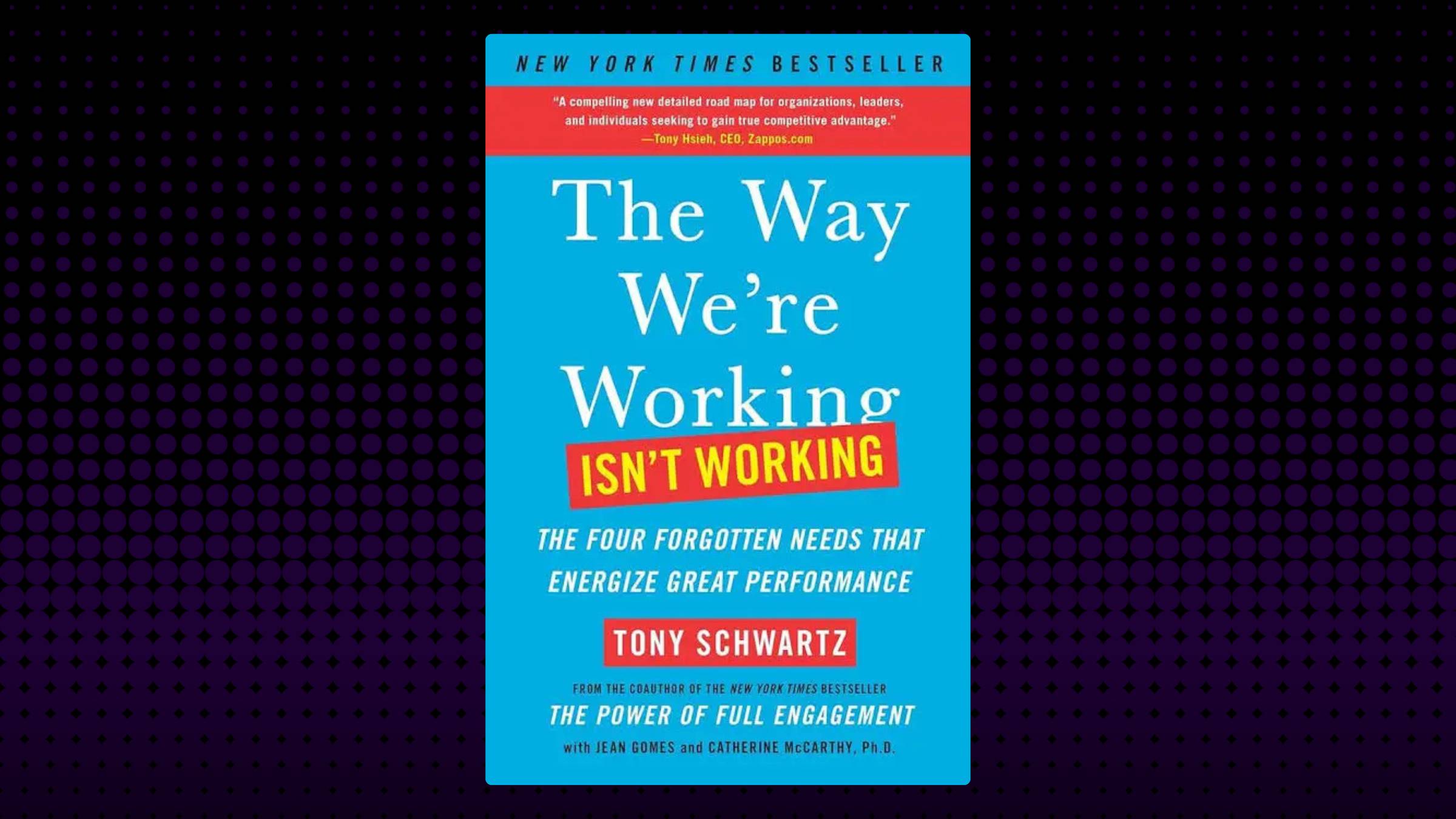
This one’s a classic for a reason. It redefines productivity through energy, purpose, and alignment, not hours. Schwartz explains why managing your values and energy gives better results than managing your calendar.
If you’ve ever hit a wall and wondered, “Why am I still tired?”, this book will give you the language and structure to fix it.
If burnout is the signal, balance is the solution, not by doing less, but by realigning what you do with what actually matters.
The Work–Life Balance Toolkit walks you through a practical reset: how to audit your week, spot misalignments, and rebuild boundaries that protect both energy and meaning.
Burnout isn’t a sign you’re weak; it’s a signal you’re misaligned.
Before you try to slow down, check your direction.
You can’t rest your way out of misalignment, but you can realign your way out of burnout.
To your unstoppable success,

Writer, The Success Method

%20(1).webp)
.jpg)


