


Ego has a bad reputation.
But most of the time, it’s not arrogance that stalls leadership growth; it’s self-protection.
Ego is the mind’s way of defending what you’ve already built.
It tells you: You know best. Don’t let go. Don’t risk what’s working.
And that’s exactly how founders get stuck, not from lack of ambition, but from the belief that what got them here will keep working forever.
At scale, ego doesn’t show up as shouting or pride.
It shows up quietly, as hesitation to delegate, resistance to feedback, or the subtle need to stay at the center of everything.

In psychology, ego isn’t your enemy.
It’s your identity under pressure.
As your business grows, your role must evolve faster than your comfort zone. But ego anchors you to old definitions of success, the founder who solved every problem, closed every deal, made every call.
At some point, that identity becomes the bottleneck.
Not because it’s wrong, but because it’s outdated.
That’s where the Five Founder Ego Traps show up.
Here’s the Cognitive Bias Map for Founders, the five thinking traps I see most often when coaching leadership teams through growth and exits.
1. The Genius Trap: Needing to be the smartest in the room.
It feels good to have the answers. But the higher you climb, the more your job becomes asking better questions, not giving better answers.
2. The Harmony Trap: Avoiding dissent.
You think you’re protecting culture, but in reality, you’re muting the debates that drive innovation. Great leaders make room for constructive conflict.
3. The Hero Trap: Overvaluing your personal contribution.
The mindset that says, “It’s faster if I do it.” Maybe once. But at scale, that belief becomes the single biggest drag on growth.
4. The Spotlight Trap: Chasing constant visibility.
You built your business by being the face of it. But real leadership is letting the spotlight shift to the team. Legacy leaders build platforms, not pedestals.
5. The Control Trap: Resisting succession.
Founders often delay handing over decision rights because it feels like losing control. In truth, succession done right multiplies your influence.
The irony?
Every one of these traps begins as strength.
Drive, confidence, vision, left unchecked, they become blind spots.
When Travis Kalanick led Uber, his vision was undeniable. He scaled faster than anyone thought possible.
But as the company grew, his leadership didn’t evolve with it. The same aggression that powered early success later created cultural instability.
Vision without evolution turned into volatility.
Eventually, he lost the role, not because he stopped leading, but because he didn’t change how he led.
The Lesson:
What made you successful at one stage often sabotages you at the next.
This week, ask yourself three questions:
Ego isn’t eliminated. It’s trained. And the leaders who scale well are the ones who evolve their identity as fast as their company.
Harvard Business Review found that founders who transition from “hero” operators to “architect” leaders drive company valuations up to 30% higher post-scale.
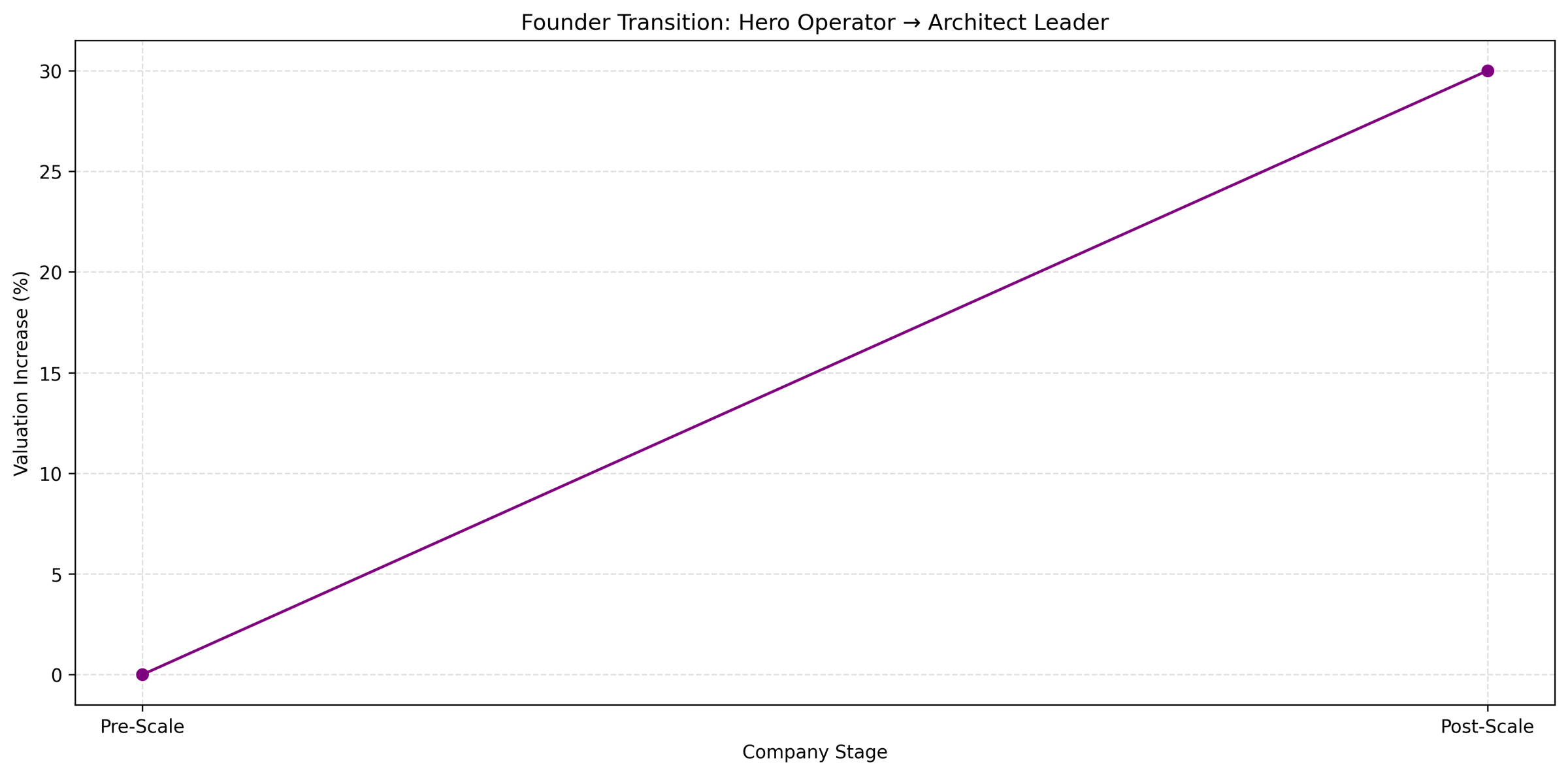
Why?
Because systems, not spotlight, are what make success repeatable.
That’s how ego becomes an asset instead of an obstacle.
Leadership isn’t about proving yourself anymore.
It’s about multiplying yourself.
Letting go isn’t weakness, it’s leverage.
Because the moment you stop being the center of everything is the moment your business becomes scalable beyond you.
Ego isn’t arrogance. It’s attachment.
To your past success. To your identity. To the way things used to work.
The leaders who grow through scale don’t kill their ego; they outgrow it.
So here’s your challenge this week:
Pick one ego trap that feels familiar.
Write down one action that counters it.
Then do it, this quarter, not “someday.”
Because evolution isn’t a mindset. It’s a move.
To your unstoppable success,

Writer, The Success Method

%20(1).webp)
.jpg)


