


You don't really know the quality of a hire until you see what they bring out in everyone else.
When I first started building teams, I got hiring wrong. I thought it was about filling gaps. The team feels stretched, so you hire fast. The workload climbs, you add another pair of hands, the problem disappears.
Except people don't join businesses in isolation.
Every person you bring in changes the environment for everyone already there. They move the standard of the work. They shape how people talk to each other. They decide what behaviour becomes acceptable and what the place actually feels like to work in.
So after years of building teams across different businesses, there's one question I ask before I hire.
Does the room get better or worse when this person walks in?
Here's something else I used to get wrong: over-rewarding output.
The person bringing in the biggest accounts got protected. The salesperson smashing the target got another chance when someone else wouldn't have. The skilled operator was allowed to behave differently because losing them felt too expensive.
The problem is you're only measuring the performance you can see.
You're not measuring the conversations that stop when they walk in. The people who shut down instead of challenging them. The good ones who eventually leave and never tell you the real reason. The hours of leadership time you spend managing the mess around one person.
The individual is performing. The team isn't. And eventually you pay the difference.
I sat with a lot of self doubt on this early on. I kept asking myself whether I was being too soft, or not soft enough, whether I was the problem. That doubt was uncomfortable, but it was also the thing that made me look harder at what I was actually rewarding. Doubt used well is just honesty arriving early.
Steven Bartlett has a useful way of thinking about this called the "Three Bars." He asks a simple question:
If everyone in the organisation had this person's values, attitude and level of talent, would the average standard of the company rise, stay where it is or fall?
I like the simplicity of it because founders often underestimate how quickly standards become contagious. Hire someone exceptional and other people notice. Keep someone who consistently misses the standard and people notice that too...
Every hiring decision teaches your team something about standards. What's tolerated, and what's not.
So turn that question on yourself - it's easy as the founder to become the person handing out all the feedback and asking for none.
I’ve put together The Coachable Mind: Your Roadmap to Growth for you to invite more feedback from the people around you.
I've interviewed plenty of people who were brilliant at interviews. I've also hired people who weren't. Eventually I stopped trusting the traditional hiring process as much.
A CV tells you where somebody has been. An interview tells you how well they can talk about what they've done. Neither necessarily tells you how they'll perform inside your business.
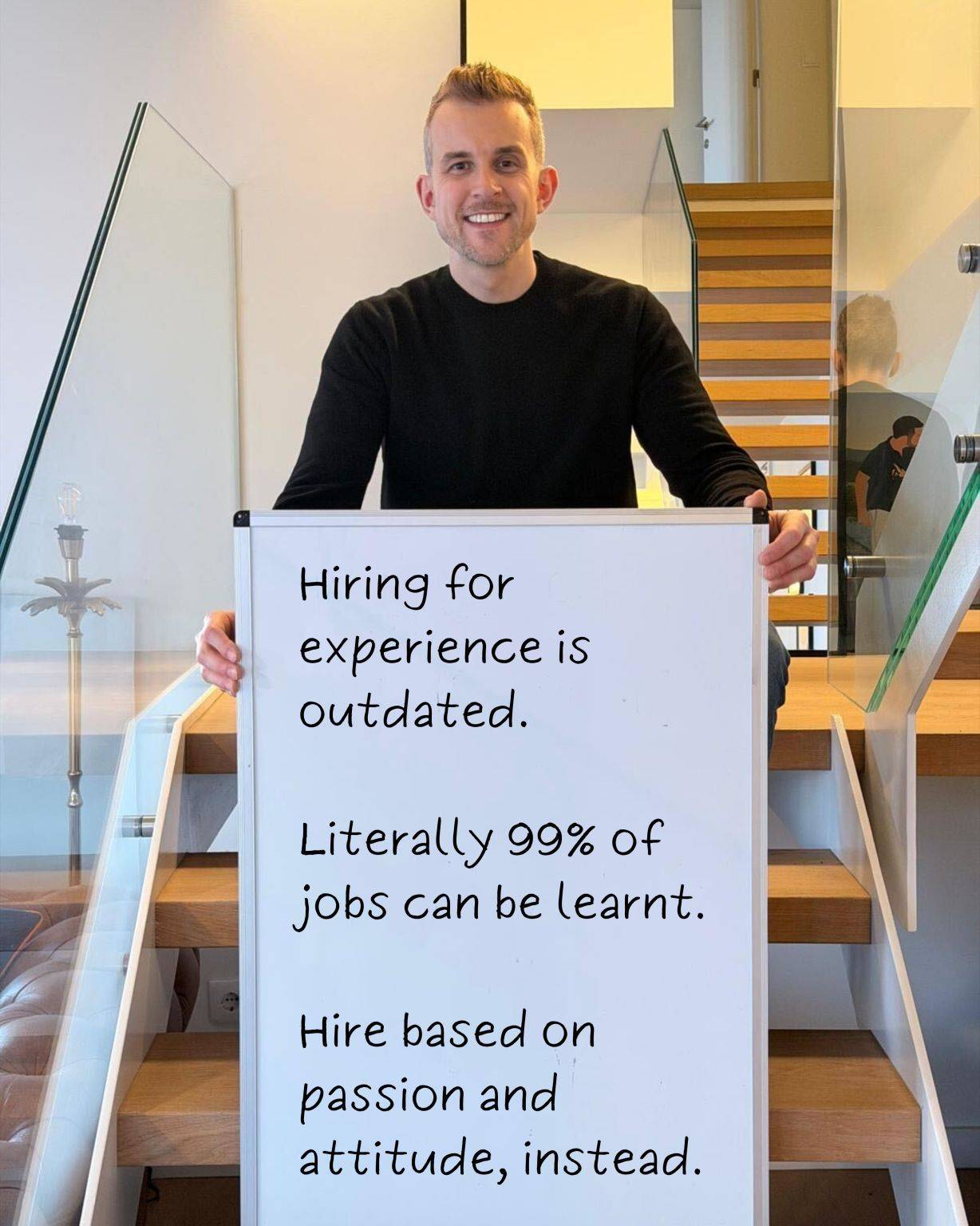
That's why one of the approaches I've used is a paid trial.
Give someone real work, pay them properly for doing it and put them alongside the people they'd work with to see what happens.
Five days of working together can tell you things five interviews never will.
Team culture isn't only affected by the people you employ, your whole network plays a part - that goes for clients, too.
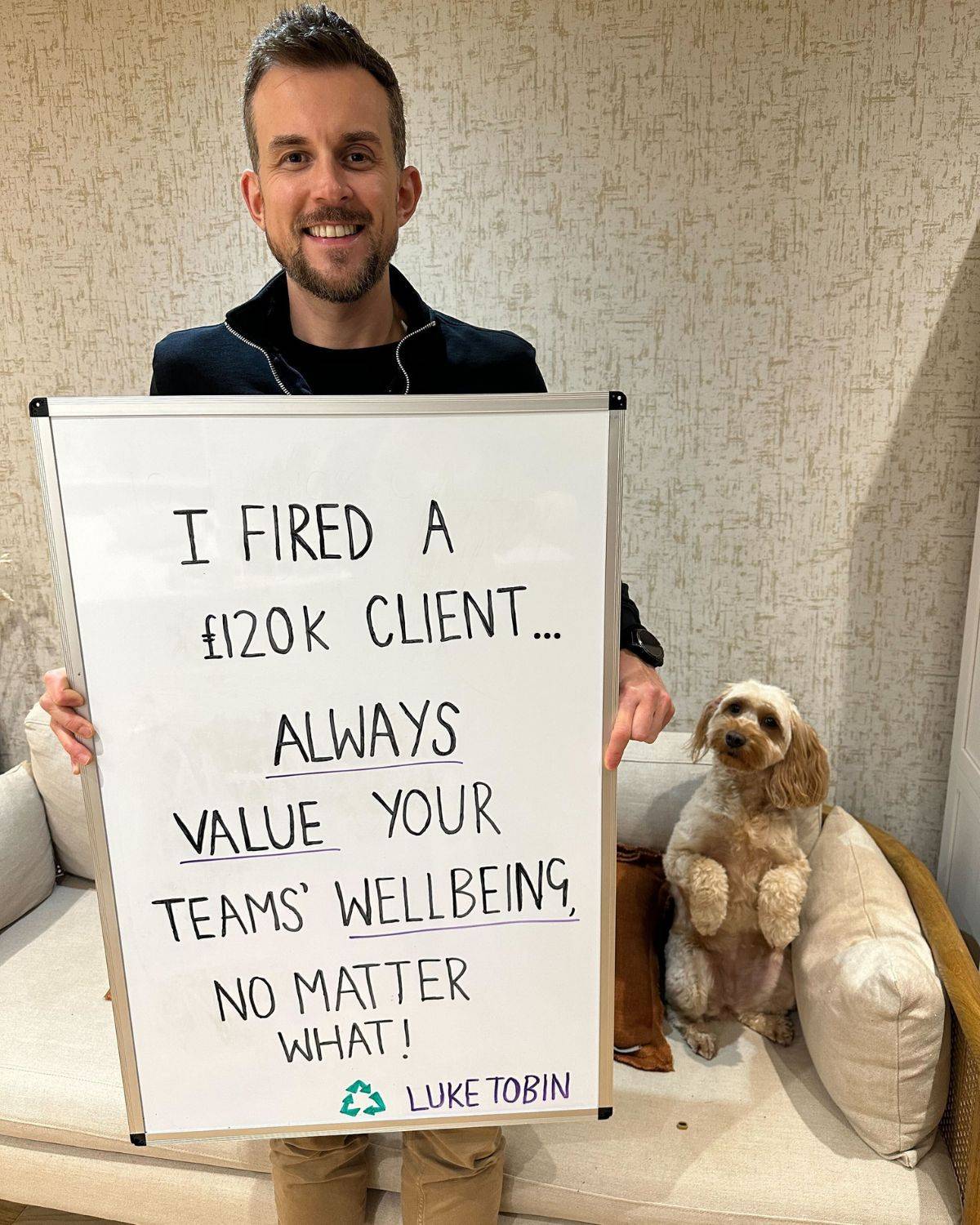
I've had clients who were commercially valuable but terrible for the people servicing them. Constant unreasonable demands, poor communication and disrespect towards the team. The temptation as a founder (especially in the early stages) is to look at the revenue and convince yourself you can manage it.
But if you tell someone they're your greatest asset and then repeatedly allow a client to treat them badly because the account is worth enough money, you've just told them how much you think they’re really worth.
One of the hardest yet maturing leadership decisions you can make is removing a toxic client, even if they’re a profitable one. Yes, you may lose some revenue, but you show the team that the standard applies to everyone.
The opposite problem can happen when someone good decides to leave. Your first instinct is often panic. More money, a different title, whatever it takes to make them stay. I've become very reluctant to counter-offer. Why? Well...because:
60% of employees that accept a counter offer leave within 6 months.
If somebody has reached the point where they've decided their future belongs somewhere else, I would rather have an honest conversation, understand why and let them leave well. Sometimes they'll come back. Sometimes they'll become a client. Sometimes they'll recommend brilliant people to you, and sometimes you'll simply have been a chapter in each other's careers.
Not every employee needs to stay forever for their time with you to have been successful.
Take a look at your team, and ask:
If everyone on my team worked, communicated and behaved like this person, would my business become better or worse?
Don't just ask it about the obvious underperformer. Ask it about your highest performer too. The answer might surprise you.
I used to think building a great team meant finding great people, but that’s just one part of it. You have to create an environment where good people can do their best work, where trust matters as much as output and where the standard is protected even when protecting it costs you money.
Hiring is one of the few decisions where you're not simply choosing one person.
You're choosing the future of your business.
Choose carefully.
Until next time,
Luke
To your unstoppable success!

Writer, The Success Method

%20(1).webp)

.jpg)


