


Hello,
Every founder knows the moment.
Your gut screams one way, the spreadsheet another.
Get it wrong, and the cost isn’t just money, it’s momentum.
Do you trust instinct, or wait until the numbers line up?
The truth is, both can steer you wrong.
The real skill is knowing when intuition is a shortcut worth trusting and when it’s a trap.
Psychologists call this Dual-Process Theory: two systems that run every decision you make.
System 1 is fast, intuitive, automatic: your gut.
System 2 is slow, analytical, deliberate: the spreadsheets.
Neither is inherently better. Both have blind spots.
Your gut is powerful when it’s working with patterns you’ve seen before. In those moments, it often spots the answer faster than analysis ever could.
But when the terrain is new, instinct without evidence is often just bias in disguise.
That’s why the smartest founders don’t ask, “gut or data?”
They ask, “Which one should lead here?”

Take Sara Blakely, founder of Spanx. Her gut told her women needed a better undergarment, even when every investor and manufacturer told her no. She trusted that instinct because it was grounded in lived experience; she was the target customer.
But notice what happened next.
She didn’t scale Spanx on instinct alone. For pricing, manufacturing, and growth, she leaned on data and advisors. Her gut got her to the product. Her discipline with data built the billion-dollar business.
Now contrast that with a founder I worked with who relied solely on “people instincts” when hiring.
They skipped structured interviews and reference checks, convinced they could read character on sight.
Six months later, the result was cultural chaos, wasted salaries, and a team running on fumes.
The mistake wasn’t listening to instinct. It was failing to test it.
Once they paired their gut feel with a structured scorecard, hiring decisions became sharper, and the culture stabilised.
So how do you know whether to lean on instinct or data?
Here’s the shortcut I share with founders:
Your gut is a pattern-recognition engine, not a crystal ball.
The trick is knowing when those patterns are useful and when they’re misleading.
Before your next big decision, pause and label it:
That 30-second pause often saves weeks of drift.
Neuroscience research from the University of Amsterdam shows intuition shines in complex but familiar domains, where the brain unconsciously processes patterns faster than conscious thought. But in unfamiliar contexts, accuracy plummets.
Gut works best when the terrain isn’t new. In the unknown, data has to lead.
Your gut isn’t the enemy of data. It’s a partner.
Trust it when the patterns are clear. Test it when the stakes are high.
This week, run your next decision through the matrix. Label it gut or data. Then add what’s missing. If it’s instinct, back it up with one datapoint. If it’s an analysis, ask what your gut already knows.
The founders who scale fastest aren’t the ones who pick sides. They’re the ones who know when to switch gears.

I’m thrilled to announce that I’ll be speaking at /function1 this November, a massive AI gathering with 10,000+ attendees, founders, developers, investors, and creators all pushing the boundaries of innovation. I can’t wait to contribute to the discussions and connect with the incredible AI community coming together in Dubai!
From scaling startups to multiple 7-8 figure exits, I'll be sharing real strategies for AI adoption, capital planning, and building companies that sell big.
If you're a founder aiming for the next level, you'll want to be in the room!
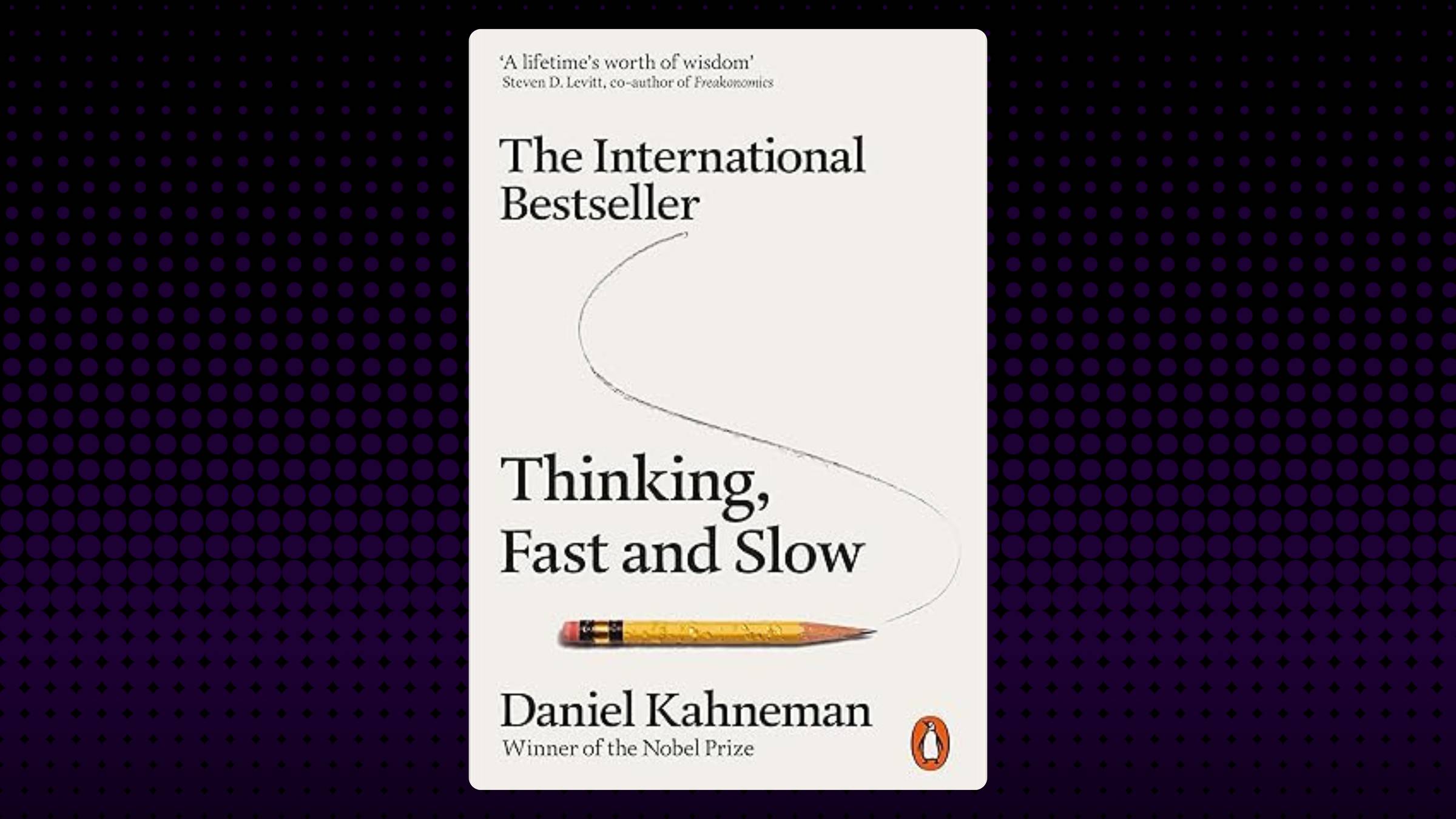
If you’ve ever found yourself stuck in endless analysis, this book feels like a mirror. Bazerman doesn’t just explain the biases that slow leaders down; he shows you how to build decision frameworks that cut through the noise.
I’ve recommended it to founders prone to overthinking, and the shift is real: fewer second-guesses, faster calls, better outcomes. If speed is the lever you need to pull, start here.
As I’ve shared your gut is powerful, but it’s not always right. The difference between instinct as a shortcut and instinct as a trap often comes down to how you frame the problem.
That’s why this week’s resource is Mind Over Matter: A Guide to Cognitive Reframing. It’s a practical PDF designed to help you spot when your thinking is stuck, challenge the story you’re telling yourself, and reframe decisions with clarity.
If intuition is your fast system, reframing is the tool that sharpens it. Pair it with data, and you’ll know when to lean in and when to hold back.
Next week, we’ll look at the hidden traps that trip founders up long before the market does: cognitive biases. From sunk costs to overconfidence, these blind spots quietly shape billion-dollar decisions as well as everyday ones.
What about you? When was the last time your gut call paid off, or backfired? Hit reply and tell me. I’ll share a few founder stories in the next issue.
To your unstoppable success,

Writer, The Success Method

%20(1).webp)
.jpg)


